Our Approach – An Overview
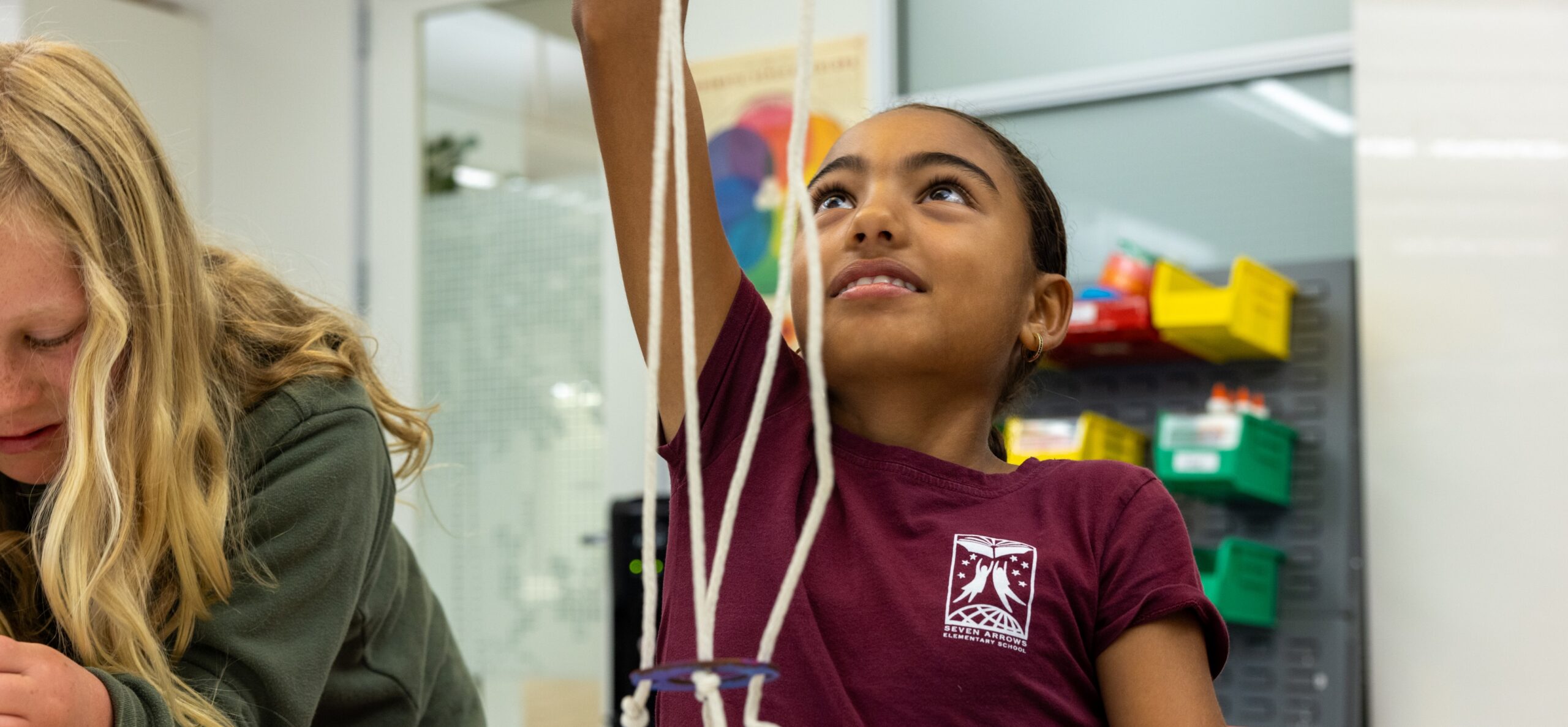
At Seven Arrows, the curriculum originates with essential themes and questions to create a framework for learning. These large ideas, and the essential questions, which are generated from the themes, have no easy answers. They provide a deep and rich context for inquiry and learning across disciplines and allow students to examine issues through many different lenses.
Integrated Experiential Learning
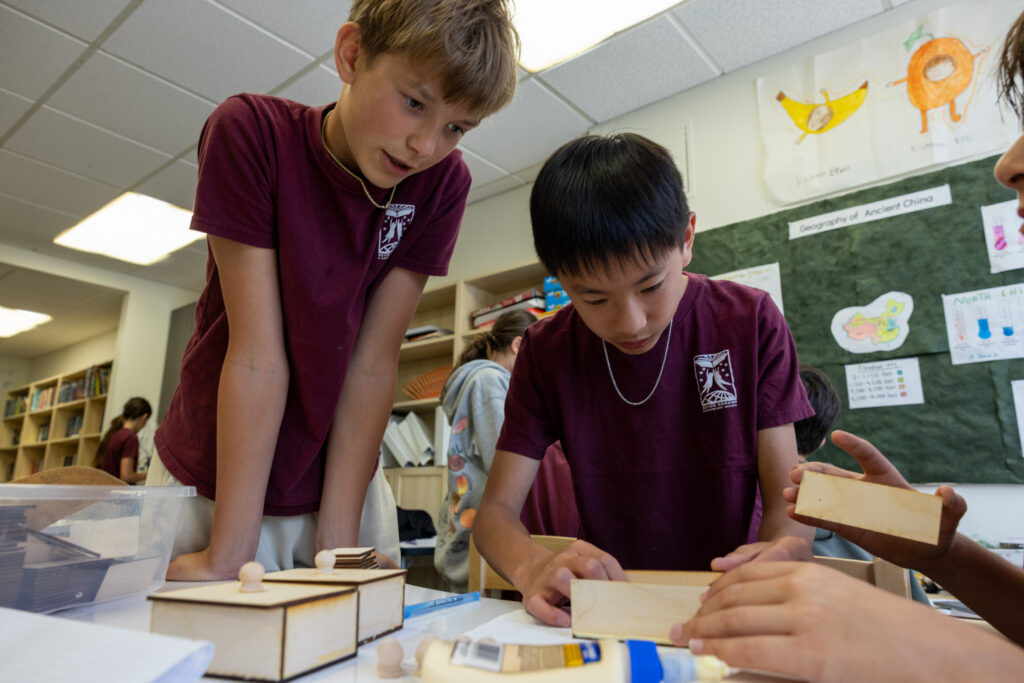
Integrated Experiential Learning provides deliberately crafted learning experiences and instruction that allow students to make connections across skills, knowledge, and community, both inside and outside of the school environment.
Traditional learning in the classroom tends to be compartmentalized into subject areas, disconnected and isolated, and focused on individual effort apart from the real-world. However, we know that life is not organized by chapters with tests to signal what information to apply. Learning from the traditional model, students often cannot apply even recently learned information to new situations. When students learn explicitly to recognize when their knowledge might be useful, can recall that knowledge, and know how to apply it, they will transfer what they know and their understanding is complete.
WHY IT WORKS
Integrated Experiential Learning provides highly differentiated learning experiences in which students develop their knowledge, skills, and understanding across multiple subject areas and in new contexts. Students use skills and knowledge from differing sources and experiences, develop perspective by understanding diverse points of view, make connections between past knowledge and new situations, and apply social emotional “life skills” to learning and doing.
With these practices, students continuously learn and adapt when windows of opportunity open. They become confident risk-takers in creative thinking, resilient in their pursuit of learning, and strive for excellence in their academic, artistic, and athletic pursuits. They understand their strengths and their needs as learners. They become respectful, responsible participants in their communities, both local and global, and possess a lifelong commitment to social justice.

Differentiation
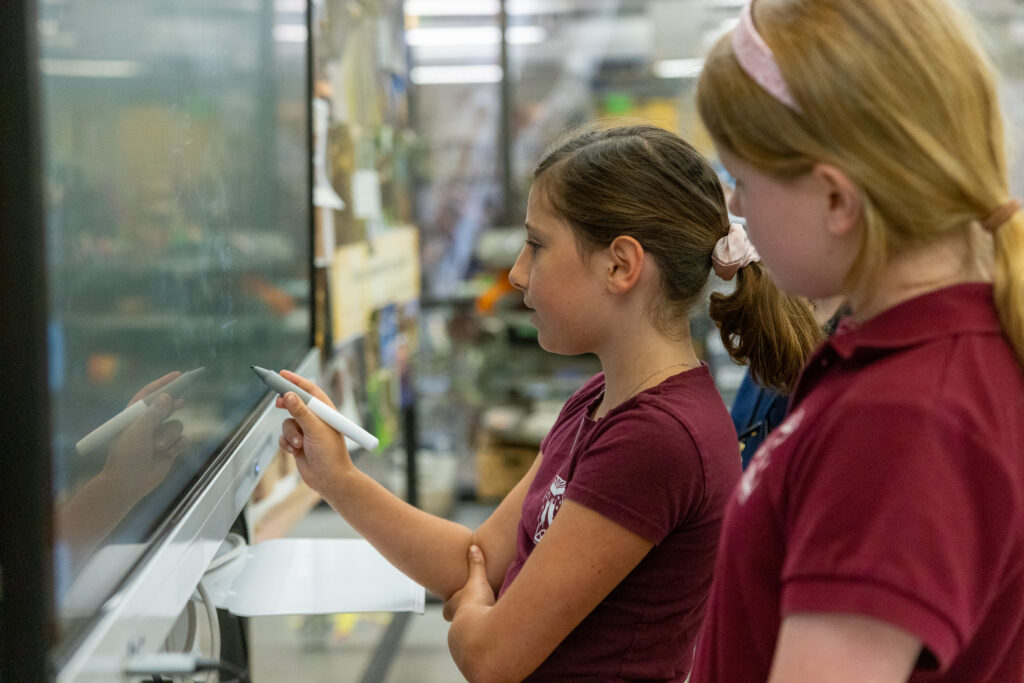
At Seven Arrows, we recognize the unique strengths and needs of each student. Our highly differentiated approach ensures that students spend a significant portion of their day in like-leveled learning groups, receiving personalized instruction tailored to their specific abilities and learning styles. Accordingly, our students tend to outpace their peers at other schools academically, particularly in math.
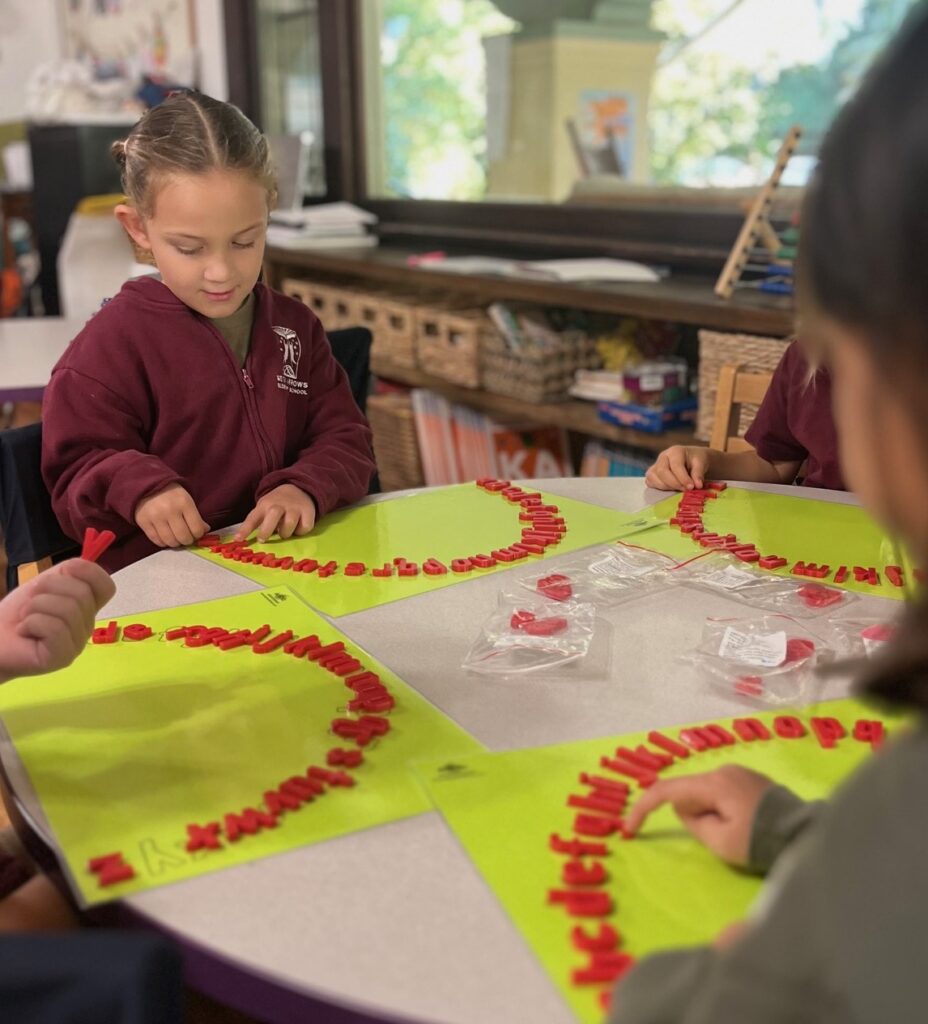
Having a differentiated learning model in classrooms allows for more engagement, and enhances the overall learning environment. Not all learning styles are alike, and differentiating instruction supports a classroom environment where multiple learning styles and interests are designed into the lesson plan. This tailoring allows for more individualization and ultimately teaches to each student’s specific learning styles.
Author and educator, Carol Ann Tomlinson, is a leader in the workings of the differentiated classroom. Because differentiation is innately challenging for most teachers who have learned to teach to the entire class, or simply scaffold to larger groups, the process of mastering this more individualized method is endless.
THE RESEARCH BEHIND DIFFERENTIATION
In her research on differentiated instruction, educator Carol Ann Tomlinson describes a fundamental shift in how teachers see their role — moving away from being the sole “keeper and dispenser of knowledge” and toward becoming a collaborator and organizer of learning opportunities. At Seven Arrows, this is the model our teachers work from every day.
Rather than focusing on having every answer, our teachers focus on truly knowing each student — their background, interests, strengths, and needs — and using that insight to build learning paths that capture attention and deepen understanding. That means constantly assessing readiness, listening for what genuinely interests a student, and offering multiple ways for them to explore, own, and express an idea, rather than a single fixed path through the material.
Covering material for its own sake takes a back seat to helping students make real meaning from what they’re learning. It’s a mindset few teachers are trained into overnight, rather it’s built over the course of a career, through constant attention to who’s actually in the room.
This is also why differentiation isn’t just about support, it’s just as much about challenge. When a student masters a grade-level expectation, our teachers don’t pause and wait for the rest of the class to catch up; they keep meeting that student where they are, with new material that stretches them further. We don’t push or pressure our students to to work harder: it happens naturally as a byproduct of a classroom built to respond to each learner in real time. Over time, this adds up and our students regularly enter middle school ahead of their peers, particularly in Math and English Language Arts.
Explore Our Academic Programs

Join Our Community