School News
Sixth Grade Yosemite Trip: Giant Sequoias, Ecology, and Growth
11/17/26
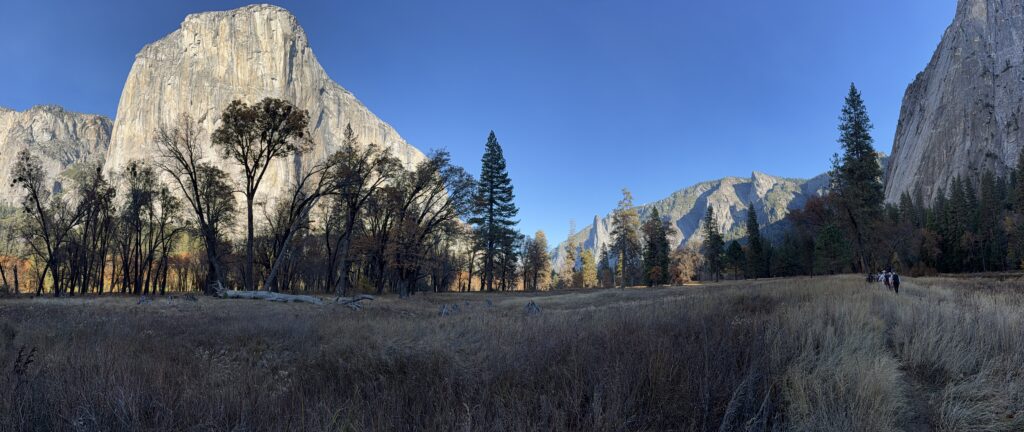
Every year, Seven Arrows sixth graders pack their bags and head to Yosemite National Park for their final Environmental Outdoor Education (EOE) trip as Seven Arrows students. For five days, they trade classrooms for granite cliffs and towering trees, living and learning together in the landscape they’ve been studying. By the end of the week, they come back different: more capable, more confident, and closer to their classmates.
Science on the Trail
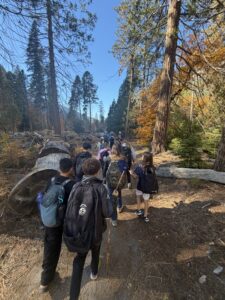

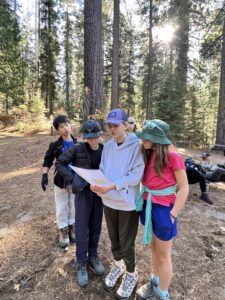 Thirty years ago, when Seven Arrows Head of School Margarita Pagliai asked Jane Goodall how to create the best possible science curriculum, her answer was simple: Let children spend time in nature. As part of that philosophy, learning in Yosemite happens outdoors. On the hike to the Henness Ridge Fire Lookout, students examined animal skulls and figured out which adaptations help each species survive in the park.
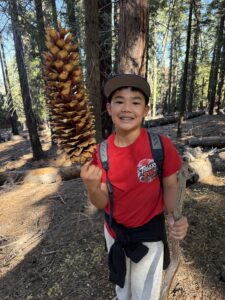
They searched for sugar pine cones, the biggest in the world, and held a contest to find the largest, laughing as they went. They also learned that lichen is actually two organisms living together, with fungus providing the structure and algae providing the food.
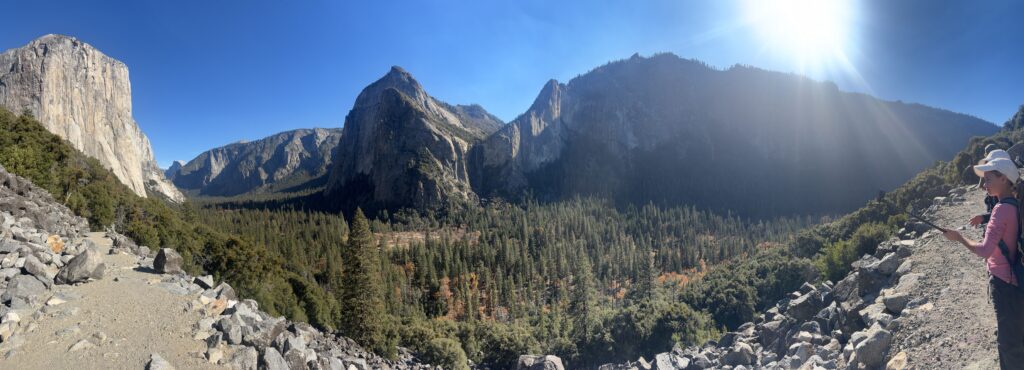
When they reached the top of the lookout tower, students looked out over the valley and talked about the rock formations that shaped it and where the rain and snow travel on their way to the Merced River. They experimented with fire boards to see how different conditions change the way fire spreads, a deeply meaningful lesson that all of our students could relate to personally.
Among the Giants
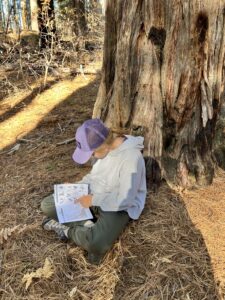
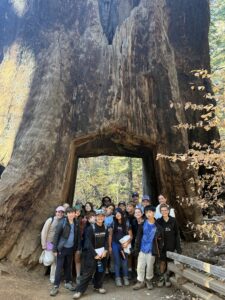
In Tuolumne Grove, students stood at the foot of giant sequoias, many of which survived the 2013 Rim Fire. They learned that sequoias actually need fire to reproduce, and how the bark, cambium, xylem, phloem, and heartwood work together to help these trees thrive for thousands of years.
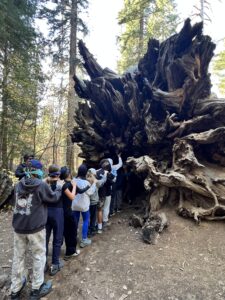
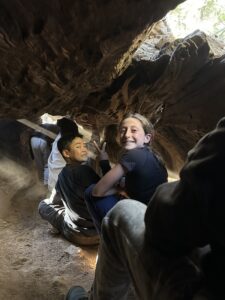
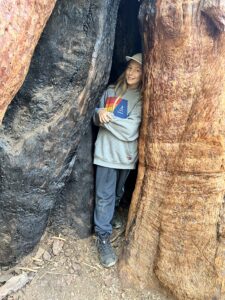
Then they met Big Red, a sequoia about 2,000 years old. It was alive before the Golden Gate Bridge, the Great Wall of China, the Mayan temples, and the Roman Coliseum. The whole class stood quietly beneath it, looking up into the canopy, a profound experience that sixth graders do not get to do every day. Nearby, they climbed inside “Dead Fred,” a fallen sequoia hollowed out over many years. Because sequoias decompose so slowly, they could walk from one end to the other, like exploring a cave. They also acted out skits in “Sequoia Theatre” to show what they’d learned, showing that science is better retained when it’s integrated with creativity, voice, and performance.
A Walk in Silence
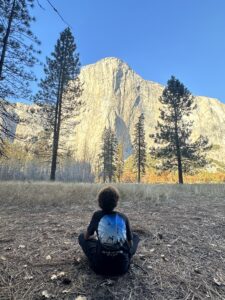
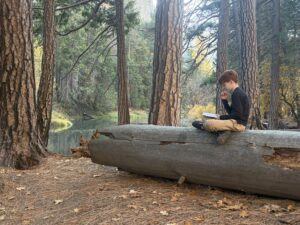
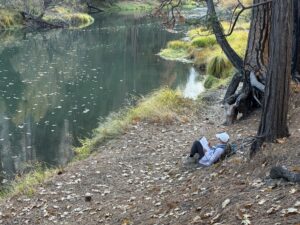 On the way back from the Fire Lookout, students spread out along the trail and walked in silence. They listened to ravens calling to one another in the trees and looked up at the tall sugar pines lining the path. For a group of kids who are used to an urban environment, it was a rare moment to slow down and be present in a serene space. Afterward, they stopped to journal.
 Debate: The Hetch Hetchy Dam
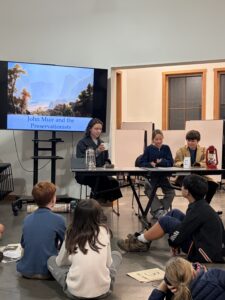
One evening, students took sides in a real and ongoing debate: should the Hetch Hetchy dam be built? They split into groups representing San Joaquin Valley farmers, the Army Corps of Engineers, John Muir and the Preservationists, Gifford Pinchot and the Conservationists, the citizens of San Francisco, and the Spring Valley Water Company. Students argued their positions and learned that important decisions rarely have one right answer. The activity gave them a way to understand where San Francisco’s water comes from today and why the debate continues.
After Dark
Students hiked at night to a clearing to learn how animals adapt to life after sunset. They studied how rods and cones work in the eye, how animals use hearing, and how echolocation works, then played echolocation games as bats and moths chasing each other under the stars. The night ended with stargazing and a story about the great grizzly bear and the hummingbird who made the night sky.
The Challenge Hike
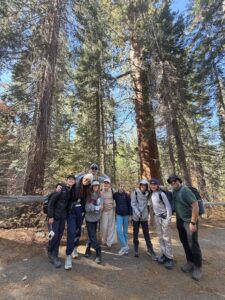
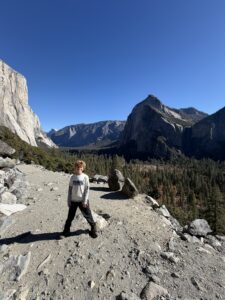
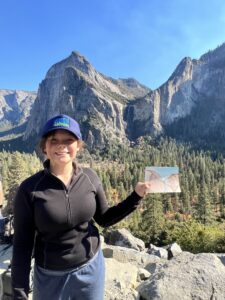
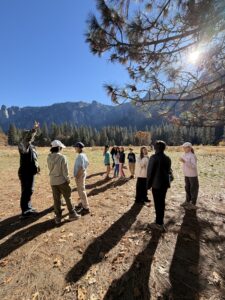
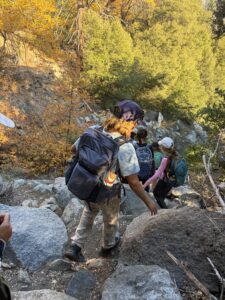 The final full day was the challenge hike into Yosemite Valley, guided by the theme of TEAM: Together, Everyone Achieves More. Students crossed the Merced River, spotted mule deer grazing in El Capitan Meadow, and followed the Old Big Oak Flat Road Trail to the end. There, their guides asked everyone to close their eyes, then turn around and open them together. In front of them were El Capitan, Bridalveil Fall, and Half Dome, spread out across the whole valley.
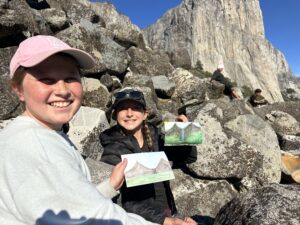
Over lunch with that view as a backdrop, students talked about the historic floods in the valley in recent years, how the watershed forms the Merced, and the trees that surround the meadows. They also connected their learning of watersheds to their previous Oceanography Unit & EOE Trip. Afterward, they painted the landscape in watercolor. Back at El Capitan Meadow, they journaled about the week and reflected on a reminder from anthropologist Margaret Mead: a small group of concerned people can change the world.
Some students then joined an elite group of Seven Arrows students and faculty who have completed the polar plunge, which means putting both feet, both hands, and the top of your head in the Merced River for 30 seconds. It was cold, but no one regretted it. Watch the polar plunge on our Instagram.
Growing Up Together
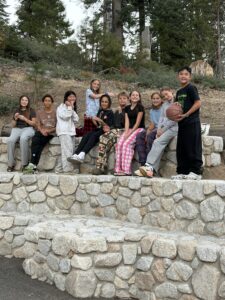
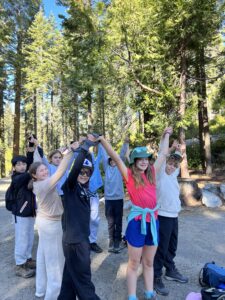
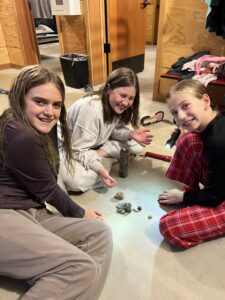
The best parts of the trip often happened between the lessons. Students got ready for bed together each night and for breakfast each morning, they took care of their camp, cleaning the dining hall and tidying their cabins. They played balloon volleyball, planned pranks, and ate big meals together after long days on the trail. They woke up to birdsong and a family of deer strolling past camp. They created songs and stories on hikes, played cards, and belted their favorite songs during the road trip there, and napped on the way back.
The week closed with a campfire. Students sang as the Yosemite Orchestra, acted out skits about their week, and ate s’mores. Then they shared the highlights and challenges of the trip, what they learned, and what they will do to protect this land so that future generations can experience a week like theirs.
Memories of this trip will last these children a lifetime. They tackle hard hikes, try things that feel scary, and rely on each other along the way. They return with deeper friendships, greater confidence, and a sense of what they can do together.